Copenhagen
50 cups in Copenhagen
May 19, 2026
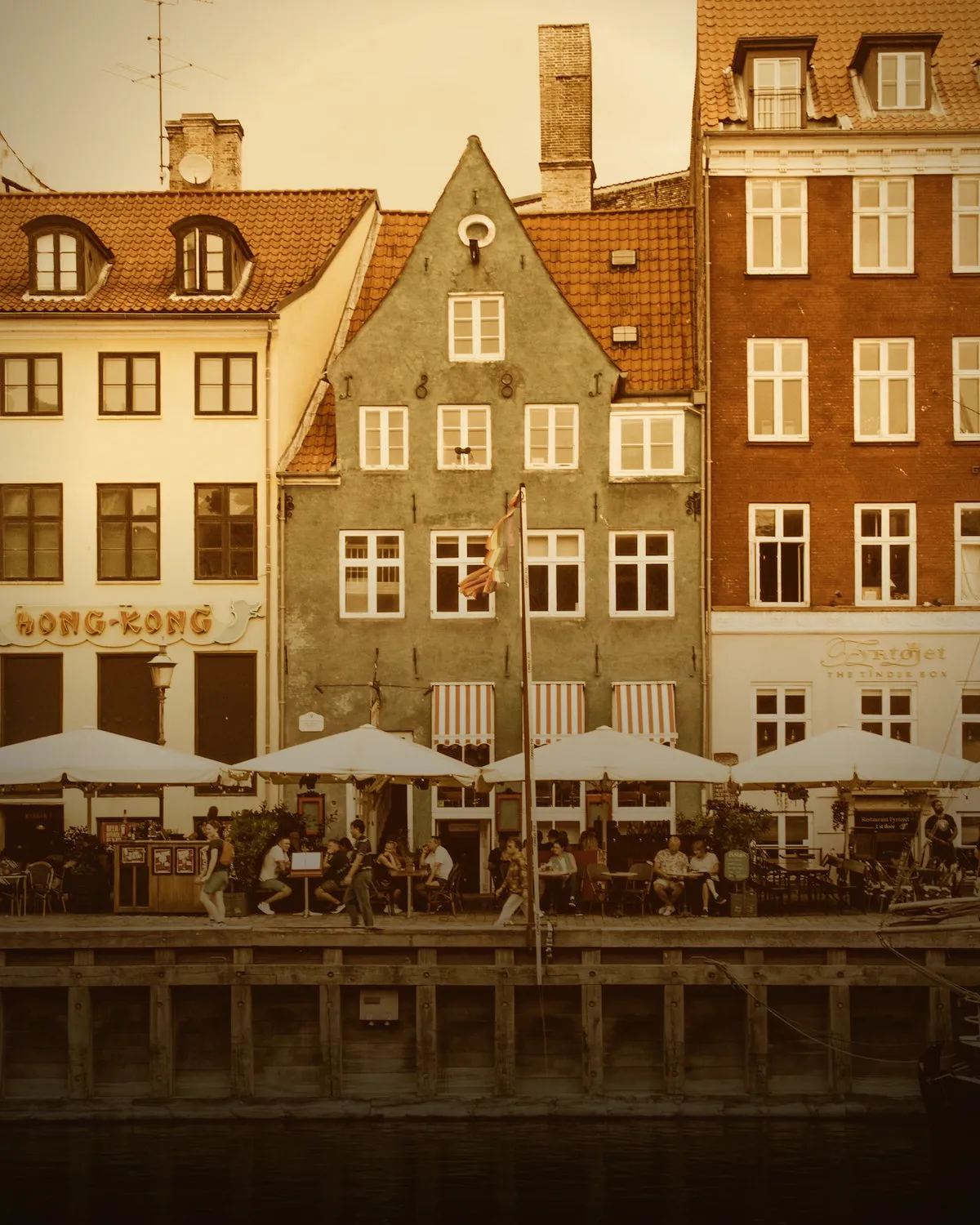
The Coffee Collective on Jaegersborggade is maybe forty square meters. On a Thursday morning in April, every seat is taken and three people are standing at the counter. Outside, the street is wet. A bicycle leans against the building with a child seat on the back and a canvas bag hanging from the handlebars. Nobody inside seems in a hurry. The filter coffee you ordered arrived in a transparent cup so you can see the color and watch it cool. The barista told you the origin, the farm name, the processing method, and the altitude. Then she went back to work. No upsell, no lingering.
This is Copenhagen. Comprehensive and matter-of-fact about the things it considers important.
How Copenhagen built its coffee culture
Copenhagen's third-wave scene began earlier than most people realize. The Coffee Collective was founded in 2007, when most European cities were still treating specialty coffee as a niche affectation. The founders, among them World Barista Champion Casper Rasmussen, had competed internationally and returned with a specific vision: direct trade, transparent sourcing, light roasting that preserved origin character rather than hiding behind the roast.
Denmark has a structural advantage here. It has one of the highest per-capita incomes in the world, which means consumers can afford to pay more for better coffee and shops can afford to pay more for better beans. The design culture, which has shaped Danish furniture, architecture, and food, also shaped the coffee shops. Sparse, functional, without decorative excess. The environment does not distract from the cup.
The cycling culture is relevant too. Copenhagen is a city where a significant portion of the population commutes by bicycle year-round. The café rhythm is calibrated to that: quick service, no obligation to sit for an hour, a quality product available without ceremony. You can also sit for an hour if you want. Nobody will rush you.
The food scene has been influential. Noma opened in 2003 and changed how Copenhagen thought about ingredients, sourcing, and fermentation. That sensibility migrated into the coffee world. Copenhagen roasters began talking about coffee in terms of terroir and processing the same way Noma talked about herbs and roots. Whether or not that language is entirely accurate, it raised the bar for seriousness and precision.
The walk: a half-day itinerary
Start on Jaegersborggade in Norrebro. The street is one of the most pleasant in Copenhagen, a pedestrian-priority lane lined with independent shops and cafés. Park your bicycle, or walk from the Norrebro station.
The Coffee Collective, Jaegersborggade is the reference point for the entire Nordic specialty scene. They source directly from farms in Ethiopia, Kenya, Colombia, and El Salvador, often returning to the same farms year after year. The relationship model is genuine: they publish the prices they pay farmers, which are consistently above Fair Trade minimums.
The espresso bar and filter station are visible from every seat. The roastery is in a larger facility in Frederiksberg, but this shop smells like coffee because of how much passes through it in a day. Order the filter of the day and ask which lot they are most excited about currently. The answer will tell you where their sourcing energy is focused.
Walk or cycle south toward Frederiksberg and find Prolog Coffee Bar near Frederiksberg Have. Prolog is smaller and newer than the Collective, and it occupies a slightly different space in the city's coffee conversation. The owners trained under the Nordic specialty canon and then applied it with their own ideas about brew ratios and water temperature. The shop attracts a regular clientele from the surrounding residential blocks.
Prolog's pour-overs are served in a specific sequence: they will ask you to wait before drinking, to let the temperature settle. This is not affectation. The temperature at which a coffee is most expressive is not always the temperature at which it arrives. Two minutes of patience regularly changes what you taste.
Order a pour-over and whatever they have on their short food menu. The pastry selection changes with the week but is usually sourced from one of the serious Copenhagen bakeries nearby.
Take the S-train or cycle to Godthaabsvej, which runs through the Frederiksberg residential district. The street is broad and lined with apartment buildings. La Cabra, Godthaabsvej is here, part of the Danish-Aarhus roaster's Copenhagen presence. La Cabra was founded in Aarhus and has expanded to Copenhagen and Berlin. The sourcing philosophy follows the Nordic model of light roasts and traceability, but the shop culture is slightly warmer and more conversational than some of the more austere Copenhagen bars.
The interior is designed with intention: oak surfaces, a roasting drum visible from the main room, seating that allows either quiet work or conversation without one interfering with the other. The filter bar is the main event. La Cabra's single-origins are among the most consistently expressive in the city.
Order a filter from a lot you do not recognize and ask the barista why it was selected. La Cabra staff are reliably good at explaining sourcing decisions without turning the explanation into a lecture.
Bring home
All three roasters sell retail bags at their shops and online. The Coffee Collective ships to most of Europe with fast turnaround. Their Kenya Kiambu lots are among their most cited, though availability is seasonal.
La Cabra sells tin packaging that travels well and holds freshness adequately for a two-week journey. The tins are also sold at Copenhagen Airport's international terminal if you forget.
For equipment, the Copenhagen standard for home brewing is the Fellow Stagg kettle (for temperature control) and the Hario V60 or Kalita Wave dripper. These are available at the Coffee Collective's shop and at most Danish kitchen stores. The Fellow Opus grinder has a growing following here. It is quieter than most burr grinders at this price point and calibrates repeatably.
Copenhagen water is soft and slightly alkaline. If you are brewing at home in a city with harder water, your results will differ from what you tasted here. Adjust your grind slightly coarser to compensate, or use filtered water with a low mineral target. The SCA recommends 75 to 150 ppm total dissolved solids. Copenhagen tap water sits near the lower end of that range.
Track your trip in Remembrew.
Save every café you visit, log every cup, get an AI summary at the end of the trip.